- **Grab bars** — installed at the toilet, shower, and tub for transfer support and balance
- **Shower chairs and transfer benches** — enable seated bathing for people who can't stand safely in a shower
- **Raised toilet seats** — reduce the distance of the sit-to-stand transfer
- **Handheld shower heads** — allow bathing while seated without reaching overhead
- **Non-slip mats** — reduce fall risk on wet surfaces
- **Toilet safety frames** — freestanding supports that bolt around the toilet for armrest-style support
Conocimiento
Adaptive Equipment for Home Safety and Independence: Making Every Room Accessible
Home should be the easiest place to function — but for people with disabilities, it's often full of barriers hiding in plain sight.
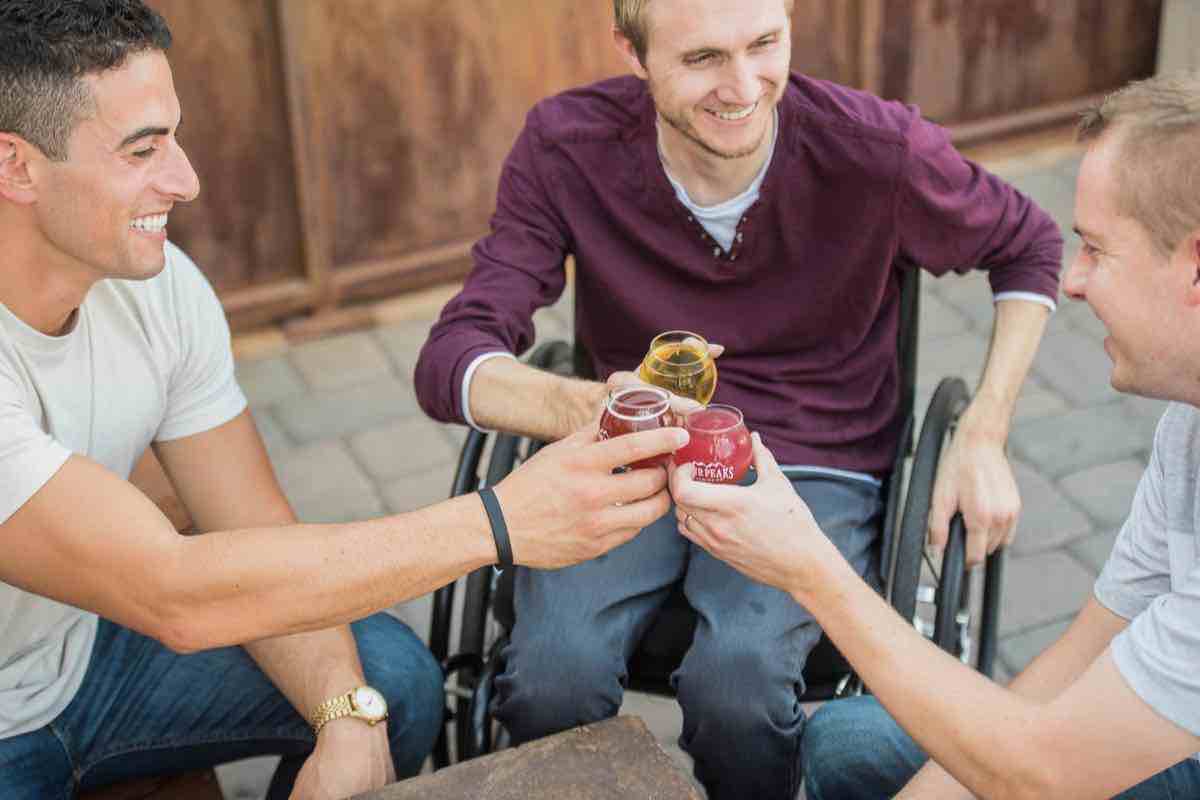
Credito de foto: EnabledHub archive
Puntos clave
**Grab bars** — installed at the toilet, shower, and tub for transfer support and balance
**Shower chairs and transfer benches** — enable seated bathing for people who can't stand safely in a shower
**Raised toilet seats** — reduce the distance of the sit-to-stand transfer
En esta pagina
Checklist rapido para cuidadores
Usa esta lista como referencia rapida antes de cada rutina de cuidado.
The Bathroom
The bathroom consistently ranks as the most dangerous room in the home. Wet surfaces, hard fixtures, tight spaces, and complex movements (standing, sitting, reaching, balancing) create a perfect storm for falls and injuries.
**Essential bathroom equipment:**
For individuals with significant mobility limitations, a roll-in shower with a zero-threshold entry eliminates the most dangerous bathroom transition entirely.
- **Grab bars** — installed at the toilet, shower, and tub for transfer support and balance
- **Shower chairs and transfer benches** — enable seated bathing for people who can't stand safely in a shower
- **Raised toilet seats** — reduce the distance of the sit-to-stand transfer
- **Handheld shower heads** — allow bathing while seated without reaching overhead
- **Non-slip mats** — reduce fall risk on wet surfaces
- **Toilet safety frames** — freestanding supports that bolt around the toilet for armrest-style support
The Kitchen
Meal preparation requires reaching, gripping, lifting, standing, and coordinating multiple tasks simultaneously. Adaptive kitchen equipment simplifies each demand:
- **Adjustable-height counters and tables** — allow work from a wheelchair or seated position
- **Pull-out shelves and lazy Susans** — bring items within reach without climbing or overreaching
- **Adaptive cutting boards** — with corner guards and non-slip bases that hold food in place for one-handed cutting
- **Electric can and jar openers** — eliminate the grip strength required for manual versions
- **Rocker knives and built-up utensils** — make eating and food preparation possible with reduced hand function
- **Non-slip matting** — keeps bowls, plates, and cutting boards stable on countertops
The Bedroom
Getting in and out of bed is a fundamental daily activity. Equipment that supports bedroom independence:
- **Hospital beds or adjustable bed frames** — allow the head and foot to elevate independently, assisting with breathing, circulation, and transfers
- **Bed rails and transfer handles** — provide something to hold during repositioning and bed-to-wheelchair transfers
- **Bed wedges and positioning pillows** — maintain comfortable and therapeutic positions during sleep
- **Bedside commodes** — provide toileting access when the bathroom is too far or too difficult to reach at night
The Living Space
General home modifications that improve accessibility throughout:
- **Ramps** — at exterior doors for wheelchair and walker access
- **Stair lifts or platform lifts** — provide access to upper floors without climbing stairs
- **Wide doorways** — at least 32 inches clear for wheelchair access (36 inches is better)
- **Lever door handles** — replace round knobs that require grip strength to turn
- **Lowered light switches and raised outlets** — positioned at heights accessible from a wheelchair
- **Smart home technology** — voice-controlled lights, thermostats, locks, and appliances reduce the physical demands of managing the home environment
Prioritizing Modifications
Not every home can be fully modified at once. A practical approach prioritizes based on:
1. **Safety** — address fall risks and emergency access first 2. **Daily essentials** — ensure independent access to toileting, bathing, and eating 3. **Quality of life** — improve access to living spaces, outdoor areas, and social environments 4. **Long-term planning** — anticipate future needs and make modifications that will remain useful as abilities change
An occupational therapist specializing in home modifications can conduct a comprehensive assessment and recommend changes that provide the greatest impact for the lowest cost.
The Return on Investment
Every dollar spent on home accessibility is a dollar not spent on emergency room visits, caregiver hours, or residential care placement. Home modifications allow people to live where they want to live — safely, independently, and with dignity.
The best home is one where you don't have to think about accessibility because it's already built in.
Blog
Leer base de conocimiento