- **Children with cerebral palsy** — high-repetition stepping promotes neural plasticity and motor learning during critical developmental windows
- **Adults recovering from stroke** — repetitive practice rebuilds walking pathways in the brain
- **Spinal cord injury** — robotic support allows stepping practice even with significant paralysis, maintaining joint health and cardiovascular fitness
- **Traumatic brain injury** — consistent, guided stepping helps retrain gait patterns disrupted by brain injury
- **Progressive neurological conditions** — maintaining walking practice longer into the disease course through robotic assistance
- **Cost** — robotic systems are expensive, and access is limited to specialized facilities in many areas
Mobilitat
Robotic-Assisted Gait Training: The Future of Mobility Rehabilitation
For decades, gait training relied on the strength and endurance of human therapists — physically guiding a person's legs through stepping patterns, often for hundreds of repetitions per session.
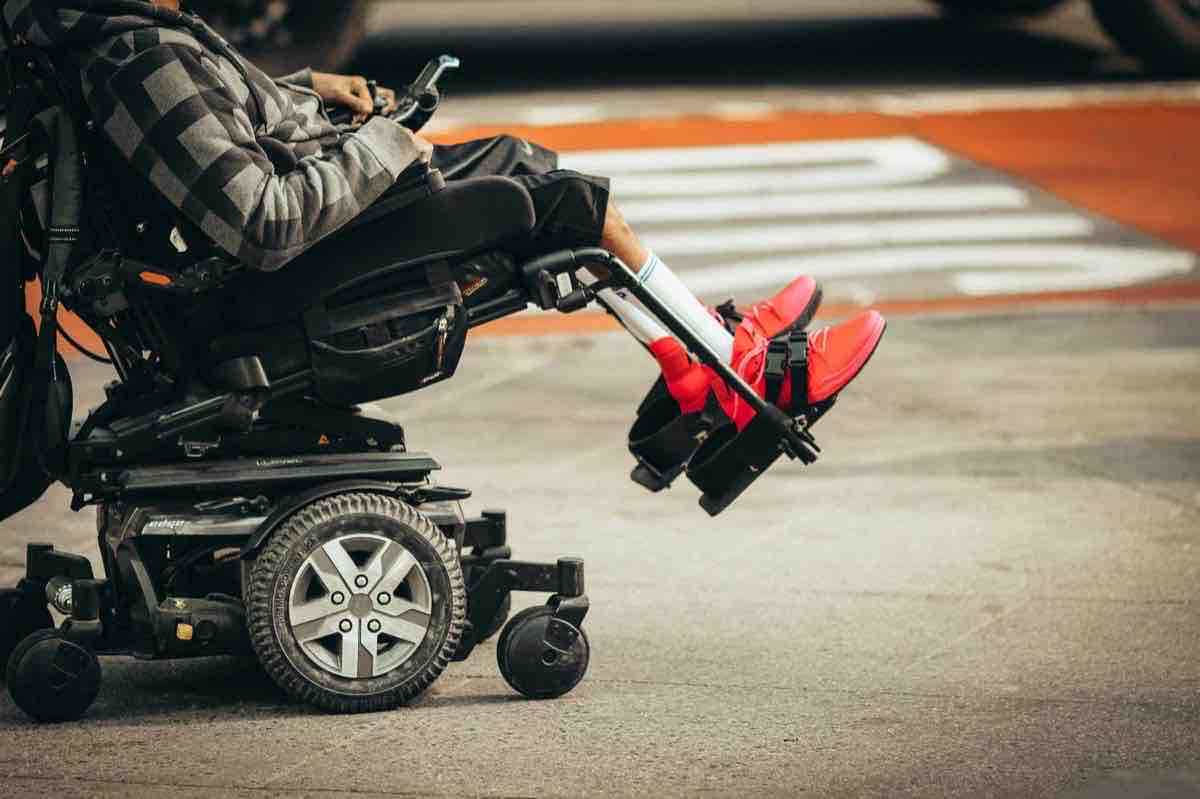
Bildnachweis: EnabledHub archive
Wichtigste Punkte
**Children with cerebral palsy** — high-repetition stepping promotes neural plasticity and motor learning during critical developmental windows
**Adults recovering from stroke** — repetitive practice rebuilds walking pathways in the brain
**Spinal cord injury** — robotic support allows stepping practice even with significant paralysis, maintaining joint health and cardiovascular fitness
Auf dieser Seite
Schnelle Pflege-Checkliste
Nutzen Sie diese Liste als schnelle Referenz vor jeder Pflegeroutine.
What Is Robotic-Assisted Gait Training?
Robotic gait training uses powered mechanical devices to assist, guide, or resist leg movements during walking practice. These systems range from full exoskeletons that wrap around the legs and trunk to simpler devices that combine robotic assistance with traditional gait trainers.
The technology serves two purposes: it provides the physical support needed for a person to practice walking, and it delivers the high-repetition, consistent stepping practice that drives neural adaptation.
Types of Robotic Gait Systems
**Fixed Exoskeletons** are treadmill-based systems that attach to the legs via motorized leg braces. The robot moves the legs through a preset gait pattern while the person walks on a treadmill. Therapists can adjust speed, step length, and the amount of assistance the robot provides. These systems are typically found in rehabilitation hospitals and specialized clinics.
**Wearable Exoskeletons** are portable powered leg braces that allow walking over ground rather than on a treadmill. They enable walking in real-world environments — hallways, community spaces, and even outdoors. Some models are designed for use in therapy sessions; others are intended for everyday mobility.
**Hybrid Systems** combine robotic assistance with conventional gait trainers. A robotic device attached to a standard walker or gait trainer provides powered stepping assistance while the person moves through real environments. These systems bridge the gap between high-tech clinic-based robots and everyday walking practice.
**End-Effector Systems** attach to the feet rather than the full leg, moving the foot plates through stepping patterns. They're simpler than full exoskeletons and may be appropriate for early-stage gait training where full leg control isn't yet needed.
Who Benefits?
Robotic gait training has shown promise for:
- **Children with cerebral palsy** — high-repetition stepping promotes neural plasticity and motor learning during critical developmental windows
- **Adults recovering from stroke** — repetitive practice rebuilds walking pathways in the brain
- **Spinal cord injury** — robotic support allows stepping practice even with significant paralysis, maintaining joint health and cardiovascular fitness
- **Traumatic brain injury** — consistent, guided stepping helps retrain gait patterns disrupted by brain injury
- **Progressive neurological conditions** — maintaining walking practice longer into the disease course through robotic assistance
The Science of Repetition
The brain learns through repetition. Motor learning research shows that hundreds to thousands of practice repetitions are needed to establish new motor patterns. In a traditional therapy session, a therapist might facilitate 50 to 200 steps — limited by the therapist's physical endurance. A robotic system can deliver 1,000 or more consistent steps per session without fatigue.
This isn't just more practice — it's qualitatively different practice. Each robotic-assisted step follows the same trajectory, speed, and timing, providing the brain with consistent sensory input to learn from.
Limitations and Considerations
Robotic gait training isn't a miracle solution:
- **Cost** — robotic systems are expensive, and access is limited to specialized facilities in many areas
- **Not a replacement for human therapy** — robots provide mechanical assistance, but therapists provide clinical reasoning, motivation, and adaptation
- **Specificity** — practice on a treadmill-based robot doesn't automatically transfer to walking in real-world environments. Overground practice remains essential.
- **Individual response** — not everyone responds equally to robotic training. Some individuals benefit more from conventional approaches.
- **Maintenance and availability** — robotic systems require technical support, calibration, and maintenance that not all facilities can provide
The Evolving Landscape
Robotic gait training technology is advancing rapidly. Costs are decreasing, devices are becoming more portable, and research evidence is accumulating. Systems that combine robotic assistance with virtual reality, biofeedback, and gamification are emerging, making training more engaging and potentially more effective.
For children, the combination of robotic stepping with traditional gait trainers may offer the best of both worlds: high-repetition robotic practice to build neural pathways, plus real-world walking practice to develop the balance, adaptation, and problem-solving that robots can't teach.
Looking Forward
Robotic-assisted gait training won't replace therapists, and it won't make every person walk independently. But it expands what's possible — more steps, more practice, and more opportunities for the brain to learn. As the technology becomes more accessible and the evidence base grows, robotic gait training is becoming a standard part of the mobility rehabilitation toolkit.
The future of walking rehabilitation isn't human or robot. It's both.
Blog
Wissensbereich lesen