- Sit-to-stand transitions at the toilet
- Maintaining balance while bathing
- Stepping in and out of the tub or shower
- Standing during grooming activities
- **Mealtime** — holding a grab bar with one hand stabilizes the trunk, allowing the other hand to manage utensils more effectively
- **Classroom work** — students can stabilize with one arm while writing or manipulating materials with the other
Bad und Dusche
Grab Bars and Upper Extremity Stabilization: Simple Supports That Unlock Independence
Independence often hinges on one thing: having something solid to hold onto.
Bildnachweis: EnabledHub archive
Wichtigste Punkte
Sit-to-stand transitions at the toilet
Maintaining balance while bathing
Stepping in and out of the tub or shower
Auf dieser Seite
Schnelle Pflege-Checkliste
Nutzen Sie diese Liste als schnelle Referenz vor jeder Pflegeroutine.
Why Stabilization Matters
The human body functions as a chain. When the arms and hands have a stable reference point, the trunk can organize more effectively. When the trunk is stable, the head can maintain a neutral position. When the head is stable, swallowing is safer, breathing is easier, and visual attention improves.
For people with impaired balance, reduced trunk control, or limited lower extremity strength, providing something to hold onto doesn't create dependence — it creates a foundation that makes functional movement possible.
Types of Stabilization Supports
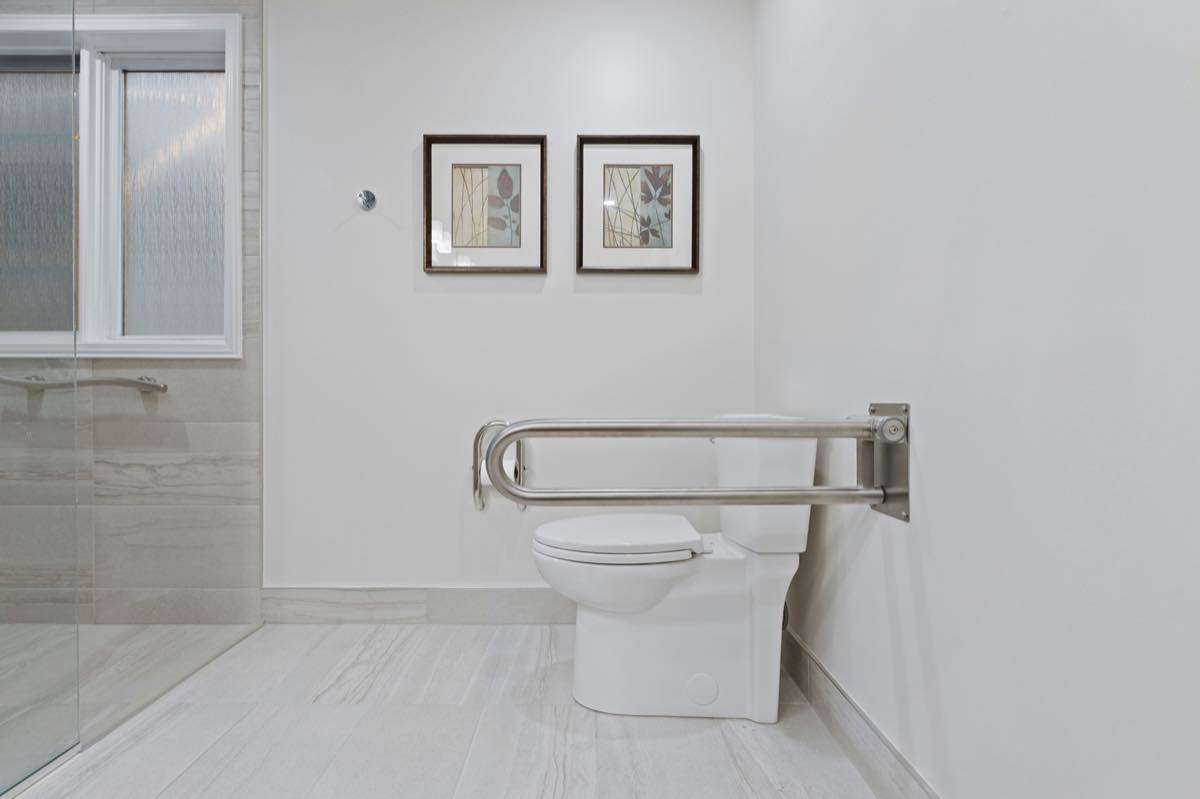
Bathroom Grab Bars
Bathroom grab bars are the most widely recognized upper extremity support. They're installed next to toilets, in showers, beside bathtubs, and along bathroom walls to assist with:
**Installation matters.** Grab bars must be secured to wall studs or blocking — not just drywall. They should be positioned at a height and angle that matches the user's reach and the specific transfer they're performing. Horizontal bars support pulling up, vertical bars support standing balance, and diagonal bars accommodate both.
Tabletop Grab Bars and Anchors
Tabletop supports clamp to tables, desks, or wheelchair trays and give the user something to hold during activities. They're particularly valuable for:
Some tabletop systems include adjustable bars, D-ring handles, and cuff attachments for individuals who can't grip independently.
Bed Rails and Transfer Handles
Bed-mounted grab bars help with rolling, repositioning, and getting in and out of bed. They range from simple handles that tuck under the mattress to full-length rails that run along the bed's edge.
Hallway and Room Rails
Wall-mounted rails along hallways, in kitchens, and near entryways create continuous support paths through the home. They allow people to walk independently through their living space rather than relying on a caregiver or mobility device for every transition.
- Sit-to-stand transitions at the toilet
- Maintaining balance while bathing
- Stepping in and out of the tub or shower
- Standing during grooming activities
- **Mealtime** — holding a grab bar with one hand stabilizes the trunk, allowing the other hand to manage utensils more effectively
- **Classroom work** — students can stabilize with one arm while writing or manipulating materials with the other
- **Therapy activities** — anchored supports provide a fixed reference point for reaching, grasping, and releasing exercises
The Impact on Function
The benefits of stabilization supports extend far beyond safety:
- **Proximal stability enables distal function** — when the shoulders and trunk are stabilized through the arms, the hands become more coordinated for fine motor tasks
- **Reduced fatigue** — less energy spent on postural control means more energy for functional activities
- **Increased participation** — the ability to hold a grab bar during a transfer can be the difference between using the bathroom independently and needing a caregiver for every visit
- **Confidence** — knowing support is available reduces anxiety and encourages people to attempt activities they might otherwise avoid
Assessment and Placement
A grab bar in the wrong location is almost as useless as no grab bar at all. Proper assessment includes:
An occupational therapist can evaluate the home environment and recommend specific types, positions, and heights for each support.
- Observing the person perform the specific task the bar is meant to support
- Measuring reach distance, grip strength, and preferred hand position
- Considering future changes in function — install bars that will still be useful as abilities change
- Testing the installation before full use to ensure it supports the person's weight and force during transfers
A Low-Cost, High-Impact Investment
Grab bars and stabilization supports are among the most affordable adaptive equipment options available. A bathroom grab bar costs a fraction of what a fall-related emergency room visit costs. A tabletop anchor that enables independent eating costs less than a month of feeding assistance.
Sometimes the simplest solutions make the biggest difference.
Blog
Wissensbereich lesen