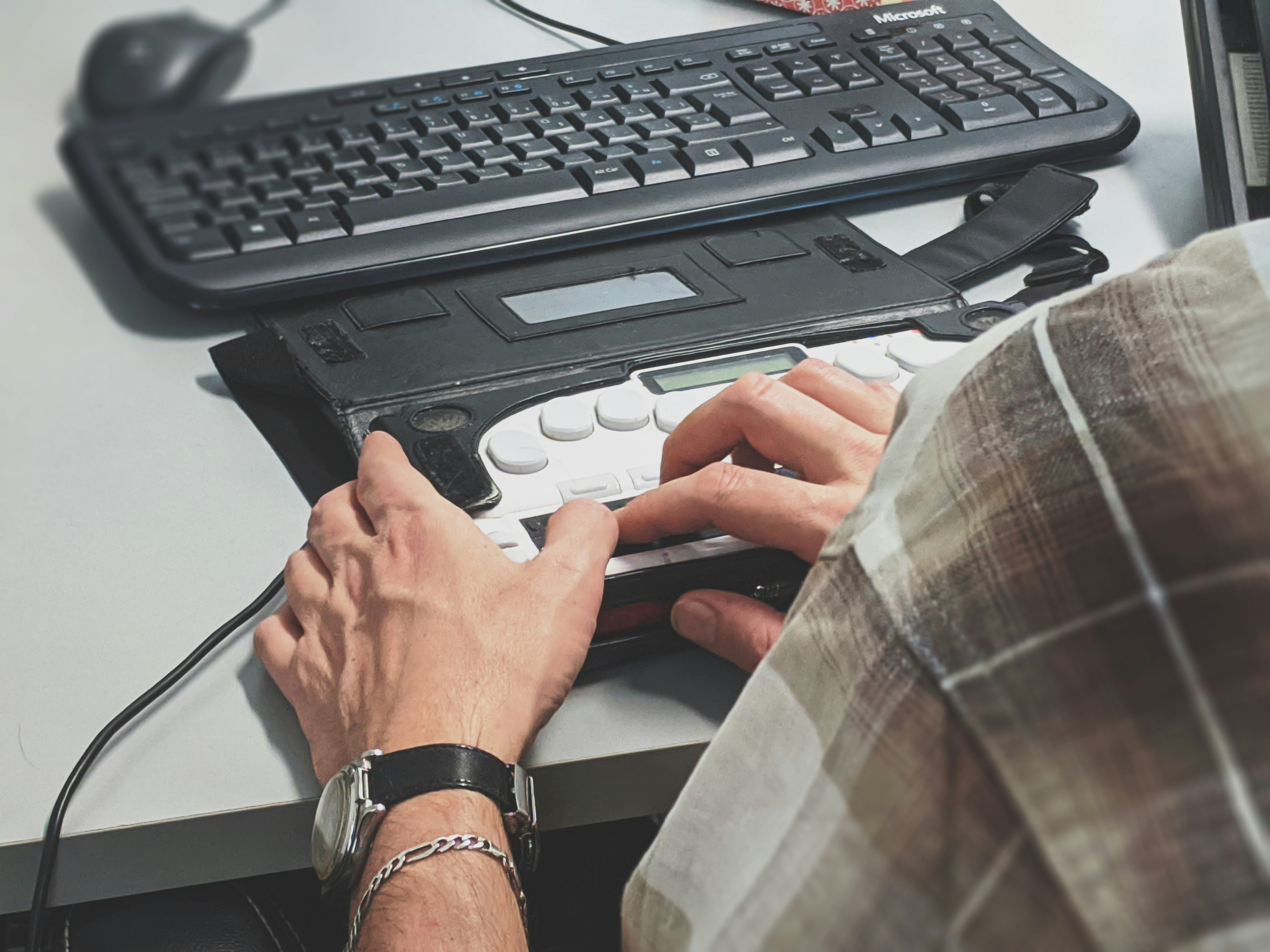
Hard vs Soft Technology: The Hidden Half of Assistive Tech
When people talk about assistive technology, they almost always mean the device — the wheelchair, the communication tablet, the hearing aid, the grab bar. In the field, that is called **hard technology**: the tangible, physical thing you can touch, buy, and put on a shelf. But researchers Cook and Polgar draw a second category that matters just as much, and it is the one most families underfund. They call it **soft technology**.
Diese Artikel ist derzeit nur auf Englisch verfuegbar. Wir arbeiten an der Deutsch-Uebersetzung.
15. Apr. 20264 min
Auf dieser Seite
What soft technology actually is
Soft technology covers everything non-tangible that has to happen for a device to work: training, written materials, coaching, decision-making support, strategies for using the device, troubleshooting knowledge, team communication, and ongoing follow-up. A powered wheelchair is hard technology. Knowing how to charge it, how to program its seating adjustments, how to transfer in and out, how to clean it, when to call for service, and what to do when the joystick is unresponsive — all of that is soft technology. Without it, the hard technology is paperweight.
Why devices get abandoned
Researchers studying assistive technology abandonment — the rate at which expensive devices end up in closets or under beds — consistently find that the problem is rarely the device itself. It is the missing soft technology. The user was not trained. The family did not learn the setup. The caregiver was not included in the decision. The clinician moved on and no one knew who to call when the battery stopped holding a charge. A device without soft technology is a one-time purchase with a very short lifespan.
Buying hard without soft is the most common mistake
Insurance often pays for the hard technology — the chair, the lift, the communication device — and quietly assumes the training will happen somewhere else. It usually does not. The result is families who own equipment they do not know how to use, or who use it in ways that create new risks. A stair lift installed without a transfer lesson can cause falls. A communication device handed over without practice sessions is often returned or ignored. Soft technology is not optional; it is the half of the purchase that actually determines the outcome.
What good soft technology looks like
When the field gets this right, the soft technology is explicit and written down. It includes a fitting session with measurements recorded. A training plan that covers the first week, the first month, and the first six months. A printed quick-reference card that lives near the device. A named contact for repairs and a named contact for clinical questions. A scheduled reassessment at three and six months. Family members and caregivers are included in the training, not just the primary user. None of this is expensive. Almost all of it is skipped.
Ask the soft-tech questions before you buy
When evaluating any new piece of assistive technology, ask the supplier or the clinician the soft-tech questions directly. Who will train us, for how long, and where? What happens if we have questions next month? How do we get the device repaired, and how long does that take? Are there written materials in our language and reading level? Is there a user community or a peer mentor? If the answers are vague, the outcome is likely to be too.
Key takeaways
Hard technology is what you can hold. Soft technology is everything that makes it work. Families and programs that invest in both — training, strategies, follow-up, written materials, human support — consistently get more value from assistive technology than those who only pay for the device. Ask the soft-tech questions before the hard-tech purchase, and you will avoid the closet full of abandoned equipment that haunts so many homes.
When someone's mobility or function changes — whether from a new diagnosis, a hospital discharge, or the slow arithmetic of aging — the home often needs to change with them. The question families ask is nearly always the same: where do we even start? The answer is to go small before you go big, because most families over-build and under-train. A few correct purchases and a handful of adjustments usually cover eighty percent of the real problem.
When families start shopping for assistive technology, the default question is \"which product is best?\" That is almost always the wrong first question. Clinicians who work in this field every day use a different starting point — a framework called the Human Activity Assistive Technology model, or HAAT. It was introduced by Albert Cook and Susan Hussey in the mid-1990s and has become one of the most widely used tools for matching people to equipment. Understanding it in plain language can transform how a family makes decisions.