The Biopsychosocial Model: How Modern Rehabilitation Actually Thinks About Disability
When families enter the rehabilitation and assistive technology system, they often carry a purely medical framing of disability: diagnosis causes impairment, impairment causes limitation, and the goal is to fix or compensate for the impairment. That framing shapes what questions get asked, what interventions get tried, and what counts as success. But it is not how contemporary rehabilitation science actually understands disability — and understanding the difference leads to better decisions.
Cette article est actuellement disponible en anglais. Nous preparons la traduction en Francais.
15 avr. 20263 min
Sur cette page
The biomedical model and its limits
The traditional biomedical model locates the problem entirely inside the body. Disability is the result of pathology, and the appropriate response is medical or prosthetic intervention aimed at the individual. This model is useful up to a point — impairments are real, and medicine addresses many of them effectively. But it systematically misses everything outside the body: the inaccessible building, the unsupportive family, the social stigma, the economic barrier, the poorly designed product. When someone fails to benefit from assistive technology, the biomedical model looks for a clinical explanation. The biopsychosocial model looks at the whole picture.
What biopsychosocial means
The biopsychosocial model, introduced by psychiatrist George Engel in 1977 and developed extensively since, holds that biological, psychological, and social factors all simultaneously shape health and disability. A person's functioning is the product of their body's capacities, their psychological responses to their situation, and the social and environmental context they inhabit. Change any of those three, and functioning changes.
The WHO's International Classification of Functioning, Disability and Health (ICF) — now the globally adopted framework — operationalizes this model. The ICF classifies disability across three interlocking domains: body functions and structures, activities, and participation. It explicitly includes environmental factors as either barriers or facilitators. Disability, in the ICF framework, is what happens at the intersection of these domains — not a property of the body alone.
What this means for assessment
A biopsychosocial assessment does not just ask "what can this person's body do?" It asks: what activities matter to this person? What barriers in their environment prevent participation? What psychological factors — motivation, identity, prior experience, fear of stigma — shape their engagement with rehabilitation? What social supports or stressors affect their ability to learn and use new technology?
This broader scope is why assistive technology assessment teams are multidisciplinary. No single professional can assess all three dimensions. The occupational therapist evaluates activities and participation. The psychologist evaluates psychological functioning and psychosocial context. The engineer evaluates the technical fit. The social worker evaluates environmental and systemic barriers. Each perspective is incomplete without the others.
The universal model of disability
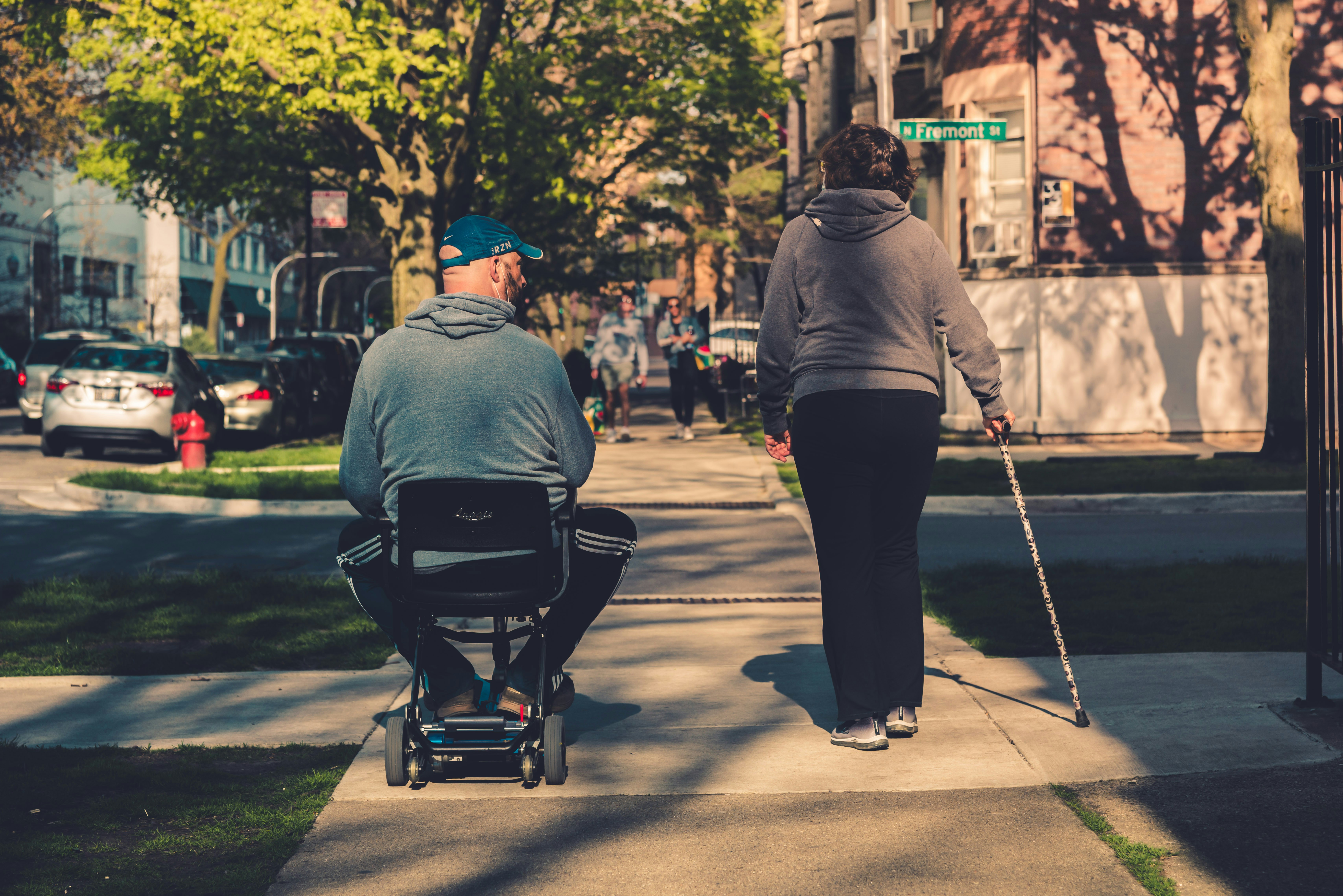
One implication of the biopsychosocial framework that often surprises families is that disability, defined this way, is a universal human experience, not a category of people. Everyone encounters barriers — environmental, social, physical — that limit participation in some contexts. The person who cannot read small print without glasses, the person who cannot hear a phone conversation in a noisy restaurant, and the person who uses a powered wheelchair all sit on a continuum of human variation. Assistive technology serves the whole continuum.
Key takeaways
The biopsychosocial model says that disability is shaped by biology, psychology, and social environment together. Good rehabilitation practice — and good assistive technology assessment — works across all three. Understanding this helps families ask better questions, challenge unhelpful framings, and appreciate why the best evaluations take time and involve multiple professionals.
Picking the right adaptive equipment is rarely about finding the \"best\" product on a list. It is about matching a specific person, a specific task, and a specific environment. The same rollator that transforms one person's independence can end up folded in a closet for someone else. Before you buy, rent, or borrow, work through the factors below — they are the same ones occupational therapists use in clinical decision making.
Getting the right piece of assistive technology is not a shopping decision — it is an assessment process. The distinction matters. Shopping starts with products. Assessment starts with the person, their goals, and the contexts where they live. Federici and Scherer's Assistive Technology Assessment (ATA) model, developed through international clinical and research collaboration, organizes this process into four clear steps. Families and users who understand these steps are far better equipped to navigate the system.