Disability as Interaction: Why Environment Matters as Much as Diagnosis
For most of the twentieth century, disability was treated as a fact about a person's body. You had a diagnosis, the diagnosis created the limitation, and the job of medicine was to fix or compensate for that limitation. That view still shapes how many insurance codes, benefit forms, and clinical conversations are written. But it is no longer how the field itself thinks about disability, and understanding the shift is essential for anyone choosing assistive technology.
Cette article est actuellement disponible en anglais. Nous preparons la traduction en Francais.
15 avr. 20264 min
Sur cette page
The shift from medical model to interaction model
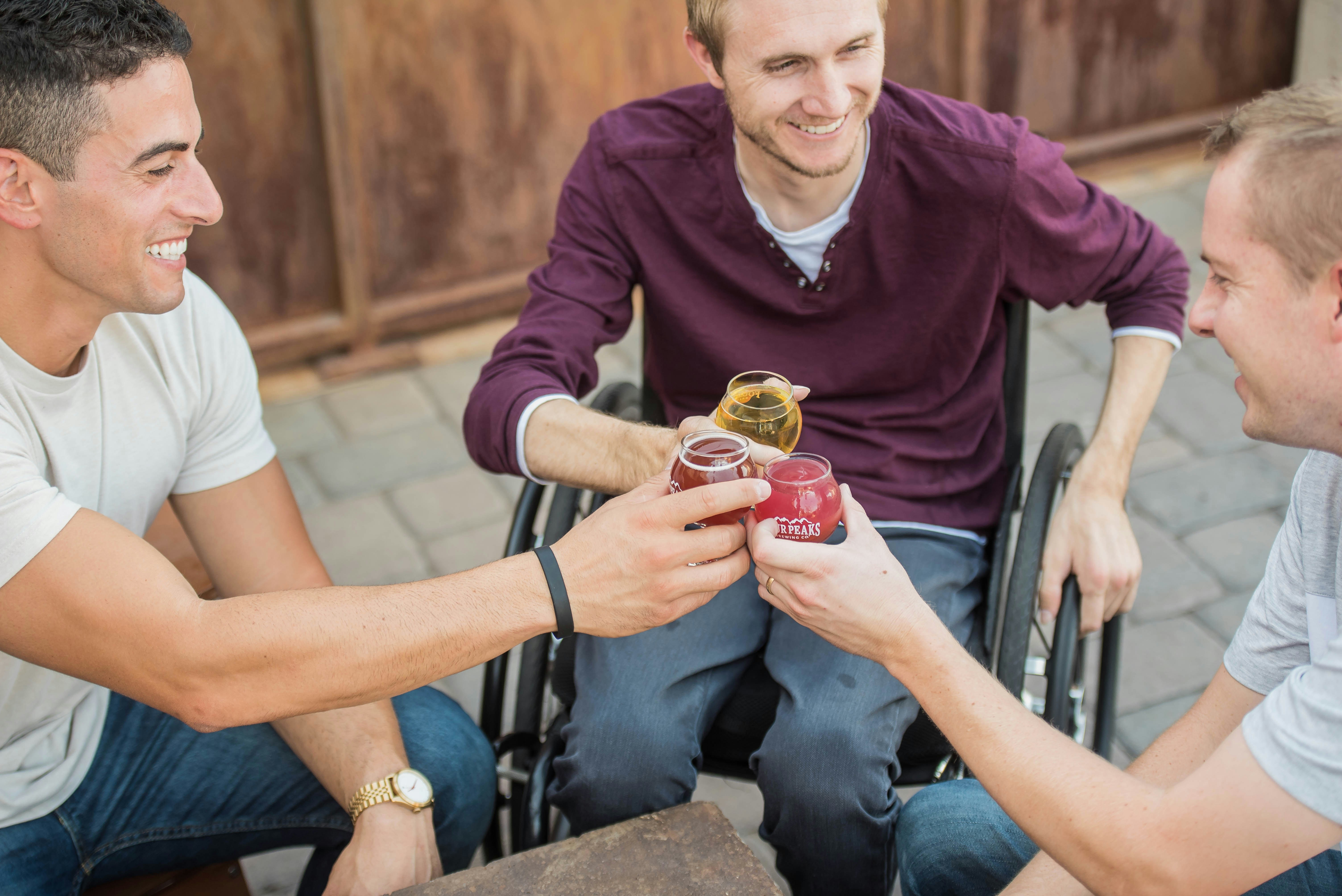
The World Health Organization's International Classification of Functioning, Disability and Health, known as the ICF, describes disability not as something located inside a person but as the result of an interaction between a person and their environment. A wheelchair user on a smooth, elevator-equipped campus is not disabled by their chair — they move, work, and participate. The same person at a venue with a single flight of stairs at the entrance is disabled at that moment, by that environment. The diagnosis did not change. The context did.
This framing matters because it tells us where to intervene. If disability lives in the body, only medicine can respond. If disability emerges from interaction, then architecture, policy, training, social attitudes, and assistive technology are all legitimate — often more effective — points of intervention.
What the United Nations codified
In 2006, the United Nations adopted the Convention on the Rights of Persons with Disabilities (CRPD), which has since been ratified by most countries in the world. The CRPD treats disability as a human rights issue rather than a medical one. It requires member states to support personal mobility with accessible, affordable options, to ensure accessibility of transportation and information, to promote access to education, employment, and civic life, and to fund research into assistive technology. Read carefully, the CRPD is essentially a global commitment to reduce the environmental half of the interaction.
Why this matters for families
The interaction model gives families a more useful planning lens. Instead of asking "what is wrong with this person that equipment can fix?" the question becomes "where does this person meet a barrier that equipment or a change in environment can remove?" That reframe is not just philosophical. It changes what you buy, what you ask schools and employers for, and how you talk about the person.
A child with cerebral palsy may not need a more complex wheelchair — she may need a classroom table at a different height and a tablet with a switch interface. A grandfather recovering from a stroke may not need a redesigned kitchen — he may need a rocker knife and a non-slip board. Most real progress comes from small, specific environmental adjustments, not large medical ones.
The practical consequence for assistive technology
Assistive technology sits exactly on the line between person and environment. A grab bar is an environmental modification. A powered wheelchair is personal technology. Both change the interaction. The field's current view is that there is no meaningful distinction between "fixing the person" and "fixing the environment" — there is only "enabling the activity." Whichever approach gets the person doing what they want to do, with dignity and sustainability, is the right one.
Key takeaways
Disability is not a fixed property of a body — it is what happens when a person meets an environment that does not fit them. Shifting the question from "what is wrong?" to "where is the barrier?" changes what you buy, what you advocate for, and how you measure success. That shift is the quiet foundation of modern assistive technology practice.
When families start shopping for assistive technology, the default question is \"which product is best?\" That is almost always the wrong first question. Clinicians who work in this field every day use a different starting point — a framework called the Human Activity Assistive Technology model, or HAAT. It was introduced by Albert Cook and Susan Hussey in the mid-1990s and has become one of the most widely used tools for matching people to equipment. Understanding it in plain language can transform how a family makes decisions.
Picking the right adaptive equipment is rarely about finding the \"best\" product on a list. It is about matching a specific person, a specific task, and a specific environment. The same rollator that transforms one person's independence can end up folded in a closet for someone else. Before you buy, rent, or borrow, work through the factors below — they are the same ones occupational therapists use in clinical decision making.