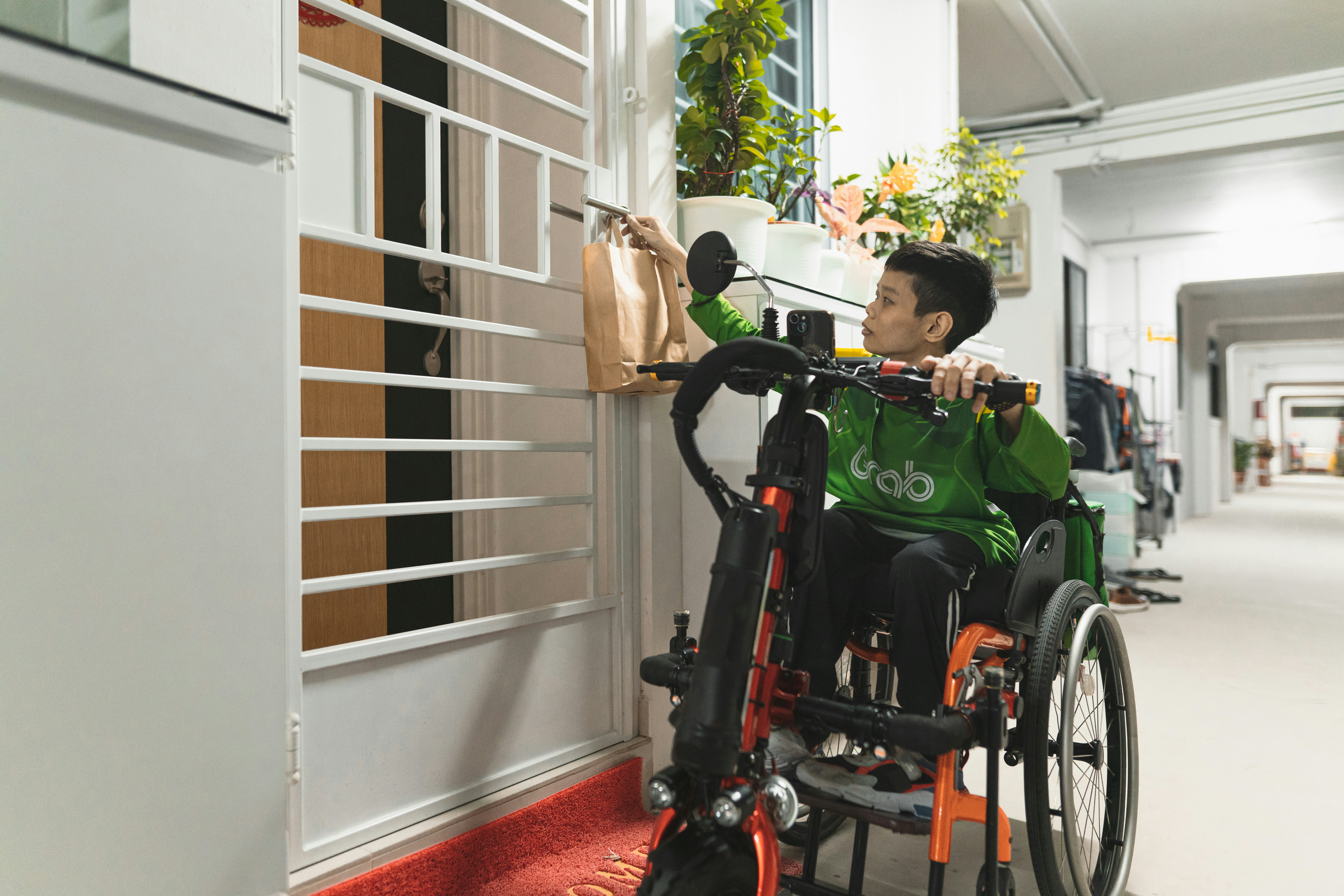
Disability Equipment and Home Adaptations: A Practical Starting Guide
When someone's mobility or function changes — whether from a new diagnosis, a hospital discharge, or the slow arithmetic of aging — the home often needs to change with them. The question families ask is nearly always the same: where do we even start? The answer is to go small before you go big, because most families over-build and under-train. A few correct purchases and a handful of adjustments usually cover eighty percent of the real problem.
Cette article est actuellement disponible en anglais. Nous preparons la traduction en Francais.
15 avr. 20264 min
Sur cette page
Walk the home like a stranger
Before buying anything, do a walkthrough with the person using the space. Start at the front door and follow the daily routine: entering, hanging a coat, walking to the bathroom, getting into bed, reaching the kitchen, answering the phone. Note every moment that requires balance, reach, strength, or cognitive effort. Those are your target areas. Photos help, especially if the person lives alone and family is planning from a distance.
Tier your adaptations
Think of home changes in three tiers. Tier 1 is removable equipment: grab bars, raised toilet seats, shower benches, bed rails, reachers, offset hinges that widen a doorway by two inches. These are fast, reversible, and often covered by insurance or loan closets. Tier 2 is semi-permanent: ramps, stair lifts, handheld showers, lever door handles, lowered light switches. Tier 3 is structural: widened doorways, roll-in showers, kitchen height changes, and elevators. Most families stop at Tier 1 and 2 for years — and that is usually the right call.
Prioritize the bathroom and the bed
If budget or energy is limited, spend first on the bathroom and the bed. A safe transfer out of bed and a safe routine for toileting and bathing cover the majority of daily fall risk and caregiver strain. Grab bars, a raised toilet seat, a shower chair, and a bed rail are the four items that change the most lives for the least money.
Ask about funding before you spend
Many communities run medical equipment loan closets, often free. Medicare Part B covers some durable medical equipment with a prescription, including walkers, wheelchairs, hospital beds, and commodes. Medicaid waivers in many states cover home modifications. Veterans may qualify for HISA and SAH grants. Some nonprofits — the ALS Association, MDA, Parkinson's Foundation — have loan or grant programs for the conditions they serve. A single phone call to a social worker or a Center for Independent Living can unlock thousands of dollars of support that families would otherwise pay out of pocket.
Use a professional once, early
An occupational therapist home assessment typically takes ninety minutes and costs less than most families expect — sometimes free through a rehab discharge. The therapist will identify risks you missed, recommend specific products and sizes, and often save more money than the visit costs by preventing the wrong purchase. This is the single highest-leverage hour in the whole process.
Train, don't just install
Grab bars do nothing if the user does not know when to reach for them. A raised toilet seat fails if the user tries to lower themselves with their knees instead of their arms. Practice new routines with the equipment, ideally with the caregiver present. Ten minutes of coaching is often the difference between a device that helps and a device that gets ignored.
Key takeaways
Start with a walkthrough, target the bathroom and bed first, lean on loan closets and insurance before spending, get one OT visit early, and train the routine. Families who follow this sequence consistently spend less and adapt faster than families who start by shopping.
The assistive technology field divides devices along a spectrum from mainstream to commercially available assistive to custom-made, and separately along a scale from low technology to high technology. Knowing where a device sits on both axes helps families make smarter purchases, because the marketing pressure is almost always toward the most complex, most expensive option — and that is very often the wrong choice.
When people talk about assistive technology, they almost always mean the device — the wheelchair, the communication tablet, the hearing aid, the grab bar. In the field, that is called **hard technology**: the tangible, physical thing you can touch, buy, and put on a shelf. But researchers Cook and Polgar draw a second category that matters just as much, and it is the one most families underfund. They call it **soft technology**.