Safe Mobility at Home: Preventing Falls Without Losing Independence
Falls are the leading cause of injury for older adults and a major setback for anyone recovering from stroke, hip replacement, or a neurological condition. The good news: most falls at home follow predictable patterns, and most of those patterns can be interrupted with simple changes. The goal is not to restrict movement — it is to make the movements people already want to make safer and more confident.
Cette article est actuellement disponible en anglais. Nous preparons la traduction en Francais.
15 avr. 20264 min
Sur cette page
Understand where falls actually happen
Most household falls happen in three places: the bathroom, the bedroom (getting in and out), and the path between them at night. Kitchens, stairs, and front entries account for most of the rest. If you can make those five zones safer, you have addressed the majority of real-world risk.
Stabilize the bathroom first
The bathroom combines wet floors, hard surfaces, and low transfers — the worst possible combination. Install grab bars next to the toilet and inside the shower or tub, anchored into studs or with heavy-duty hollow-wall anchors rated for 250+ pounds. Add a non-slip mat inside and outside the shower. For anyone with balance or endurance limitations, a shower chair or bath bench transforms bathing from a risk into a routine. Raised toilet seats with armrests reduce the sit-to-stand effort that often triggers falls.
Light the path
Nighttime bathroom trips are a classic fall scenario. Motion-activated nightlights in the bedroom, hallway, and bathroom solve this almost entirely. Keep a lamp within arm's reach of the bed. If the user wears glasses, put them on the same side of the bed every night so they can be found in the dark.
Rethink footwear and clothing
Socks slide. Slippers flop. Long robes catch. The safest in-home footwear is a supportive shoe or a purpose-built non-slip indoor shoe. Avoid backless slides. For trousers, hem length matters more than people realize — a half-inch of extra fabric is enough to catch a toe on a stair edge.
Use a mobility aid on purpose
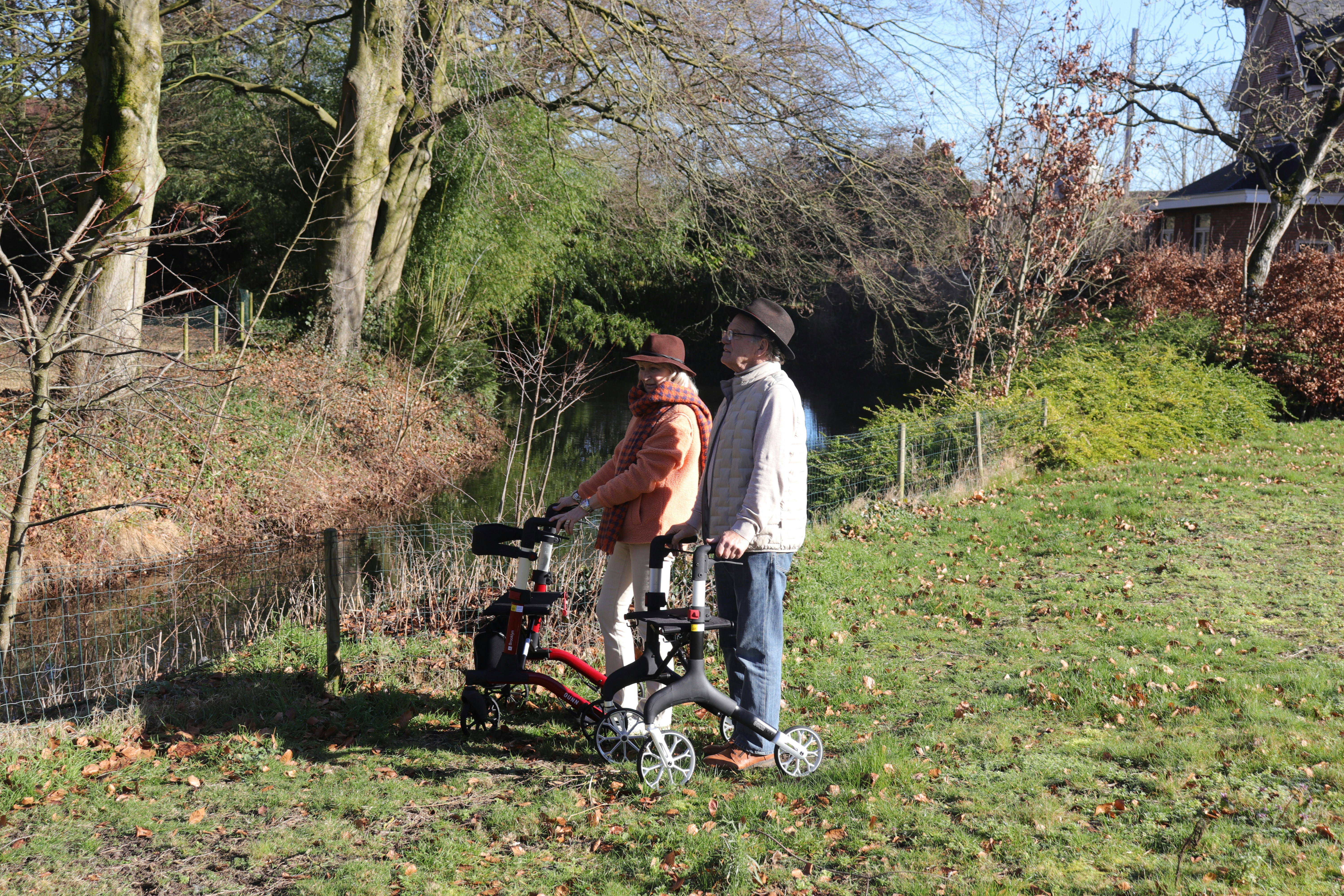
Canes, rollators, and walkers only work when they are the right height, in the right hand, and actually used. A cane goes in the hand opposite the weaker leg. A rollator is pushed, not leaned on like a shopping cart. If an aid has been prescribed, use it everywhere — many falls happen during the short "I don't really need it for this" trip to the kitchen.
Clear the floor, not the house
You do not need to redesign the whole home. You need to remove the specific things people trip over: loose rugs, phone and lamp cords across walkways, pet bowls in traffic lanes, stacks of mail near doorways. Rugs that must stay should be taped down or replaced with low-pile alternatives.
Build strength, not just safety
Safety equipment prevents the worst outcomes, but strength and balance prevent the fall itself. Evidence-based programs like Otago, Tai Chi for Arthritis, and simple sit-to-stand practice measurably reduce fall rates. Ten minutes a day is enough to see a difference within two months.
After a near-miss, investigate
Treat every "I almost fell" like a small incident report. What was the task? What were they wearing? Was the light on? Was the aid nearby? Patterns emerge quickly, and fixing the specific cause is usually cheaper and faster than a general remodel.
Key takeaways
Safe mobility is about five zones, two habits (lighting and aid use), and one mindset: investigate near-misses before they become injuries. Independence and safety are not opposites — the right equipment and a few honest conversations make both possible at the same time.
When assistive technology fails, the device itself is usually not the problem. Research in the field consistently identifies a more common culprit: a mismatch between the device and the environment where it is supposed to be used. Federici and Scherer's handbook devotes an entire chapter to environmental assessment precisely because the environment is one of the most powerful predictors of whether a device succeeds or is abandoned — and one of the factors most commonly overlooked in standard evaluations.
A well-run assistive technology service looks nothing like a showroom or a catalog. It looks like a conversation. Cook and Polgar describe four service-delivery principles that consistently separate programs that deliver lasting results from those that ship devices and hope for the best. Families who recognize these four principles in a clinician or supplier can trust they are in good hands. Families who do not see them should keep looking.