Accessibility, Sustainability, and Universal Design: Assessing the Environment for AT Use
When assistive technology fails, the device itself is usually not the problem. Research in the field consistently identifies a more common culprit: a mismatch between the device and the environment where it is supposed to be used. Federici and Scherer's handbook devotes an entire chapter to environmental assessment precisely because the environment is one of the most powerful predictors of whether a device succeeds or is abandoned — and one of the factors most commonly overlooked in standard evaluations.
Cette article est actuellement disponible en anglais. Nous preparons la traduction en Francais.
15 avr. 20264 min
Sur cette page
Three concepts that define a good environment for AT
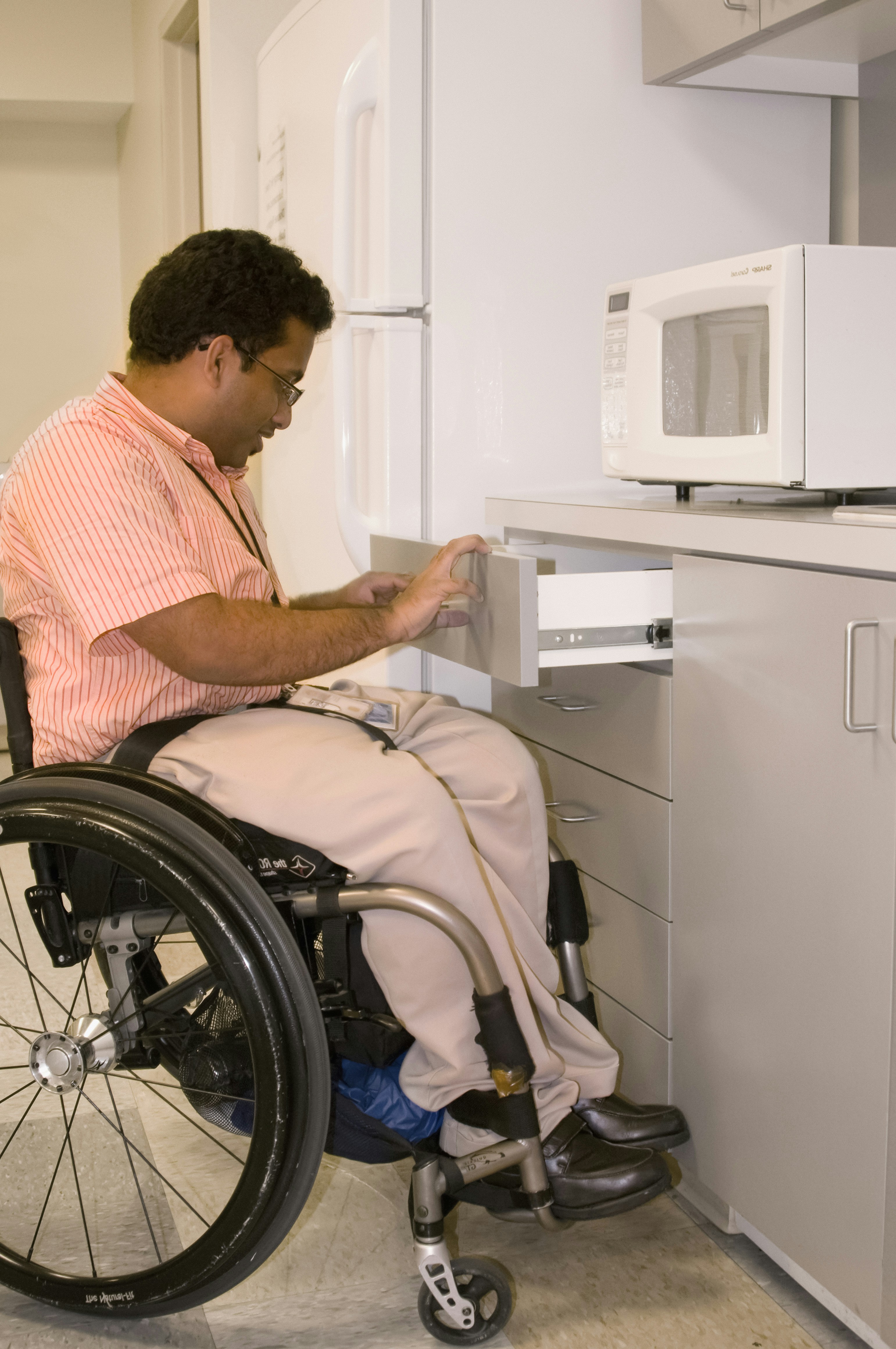
**Accessibility** is whether the environment physically and functionally supports the use of the device. A communication device is accessible when a teacher knows how to prompt its use in the classroom. A powered wheelchair is accessible when the home, school, or workplace has paths wide enough to navigate and surfaces smooth enough to travel. Accessibility is not just about building codes — it is about whether the everyday contexts of a person's life are compatible with the technology they need.
**Sustainability** is whether the environment can support the device over time. Sustainability includes whether the device can be repaired locally, whether funding exists for maintenance and eventual replacement, whether training can be repeated when caregivers change, and whether the institutional context — a school, a care facility, a workplace — has the policies and capacity to accommodate the device on an ongoing basis. A device that works in year one but cannot be sustained in year two or three is not truly accessible.
**Universal design** is the design philosophy that environments and products should be usable by all people, to the greatest extent possible, without specialized adaptation. The Seven Principles of Universal Design — from the Center for Universal Design — include equitable use, flexibility in use, simple and intuitive operation, perceptible information, tolerance for error, and low physical effort. When an environment is designed on these principles, less assistive technology is needed in the first place, and the technology that is needed fits more naturally into the environment.
Why environmental assessment belongs in every AT evaluation
The research evidence is clear: conflict between assistive technology and its context of use is a major driver of nonuse and abandonment. A device that requires an environment to be substantially reorganized will face resistance. A device that requires consistent, knowledgeable caregiver support in an environment that has high caregiver turnover will fail. Identifying these mismatches during the assessment — before the device is prescribed and delivered — allows the team to address them proactively, whether by choosing a different device, modifying the environment, adding training, or advocating for policy change.
What a good environmental assessment looks at
A structured environmental assessment considers the physical space (dimensions, surfaces, lighting, acoustics), the social environment (caregiver knowledge, family attitudes, peer acceptance), the cultural context (community norms around disability and technology), and the institutional context (school or employer policies, funding structures, repair networks). It evaluates accessibility and sustainability across the person's primary environments — home, school or work, and community — and identifies specific barriers and facilitators at each level.
The step-by-step decision process
In practice, the environmental assessment in the ATA process follows a sequence: identify the key environments, describe each one across the three dimensions (accessibility, sustainability, universal design), identify the highest-priority barriers, and propose specific modifications or accommodations. The output is not a checklist but a set of concrete recommendations that become part of the overall assistive solution.
Key takeaways
The right device in the wrong environment will not succeed. Assessing accessibility, sustainability, and universal design principles across the key contexts of a person's life is not optional extra work — it is the part of the process that determines whether the technically correct choice becomes a practically successful one.
Falls are the leading cause of injury for older adults and a major setback for anyone recovering from stroke, hip replacement, or a neurological condition. The good news: most falls at home follow predictable patterns, and most of those patterns can be interrupted with simple changes. The goal is not to restrict movement — it is to make the movements people already want to make safer and more confident.